In the Spotlight:

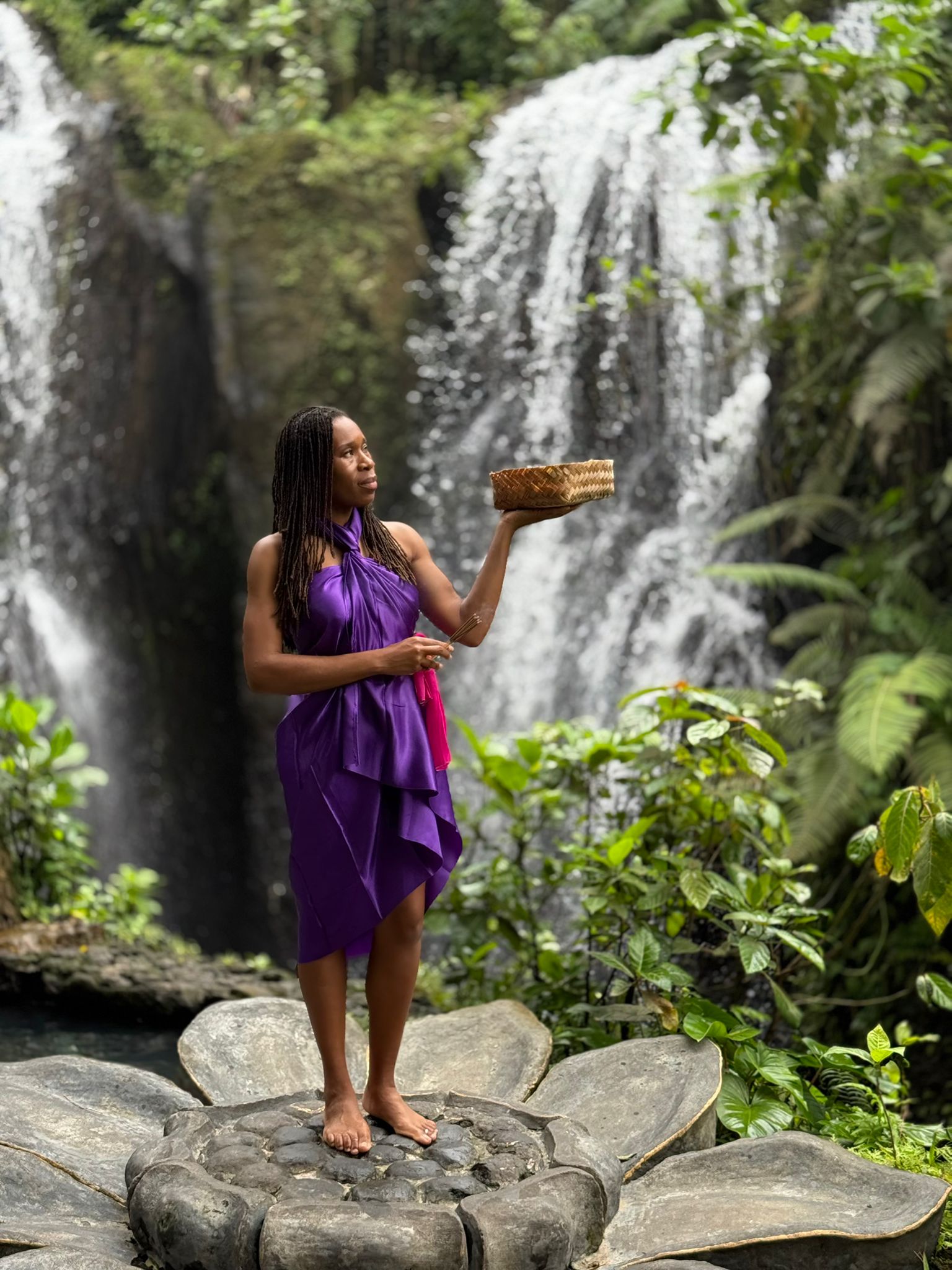
Professor Udoka Nwanna was not always drawn to the spiritual world. While working as a deputy district attorney in San Diego prosecuting cases, she was asked by a friend to see a shaman, a spiritual healer. Her instinct was to say no, because “it sounded weird, and I don’t do that stuff.” But she went anyway, and the shaman described her great-grandfather “to a T,” someone the shaman had never met and knew nothing about. She was sold, and her journey into the spiritual world began.
What followed was not just a hobby but a passion. She began reading about all faiths and belief systems and started attending classes at the Arthur Findlay College of Psychic Science, a world-renowned center for the advancement of psychic and spiritualist studies in Standsted, England. There, she took classes in subjects such as psychic and mediumship development, sharpening the muscle behind her gifts. In other words, she began her journey into metaphysical studies, or what some might call “woo-woo.”
Nwanna approached her training like a lawyer building a case, developing her skills as a “spiritual intuitive life coach” and “medium.” Her work today ranges from connecting clients with deceased loved ones to serving as a “medical intuitive,” reading physical ailments as manifestations of unresolved emotional history.
A related passion of hers is yoga, which she started because she had free time after passing the bar exam and before beginning to practice law. A one-week free trial was all it took. Yoga has since played a key, foundational basis in her second career. Now she leads annual retreats in places such as Bali, Cambodia, Mexico, and California, and will lead one in England next year. She also works with corporate clients, bringing the same tools of presence and self-awareness into the workplace.
In 2017, she launched her website, https://www.spiritualblacksmith.com/, a spiritual healing and intuitive life coaching practice. She came up with the name when she was backpacking in Iceland. Because it was the time of year when it is light for 24 hours, she could not sleep,  and her “Spirit Guides dropped that name in [her] ear.” Of course, drawing on her legal background, and ensuring the name was not in use by anyone else, she developed a logo and trademarked the name.
Asked whether she has encountered cynicism from colleagues about her passions, she said no, but “if people think it’s weird, they will just leave me alone.” That is fine with her. Though these passions might seem paradoxical for someone who practices law, she describes herself as a “logical, left-brain person” underneath. In fact, if she were using modes of persuasion to describe herself, she would begin with logos, move to ethos, and end with pathos.
Nwanna teaches first-year legal writing, a course built on frameworks like IRAC, but she teaches those principles alongside another fundamental skill: intuition. She wants her students to understand that lawyers are “counselors” in every sense of the word, and that they need to learn the human side of lawyering along with the rational side, calling on soft skills like empathy and authenticity to build relationships with clients who “are arriving to us at their worst.”

Because she teaches the same students for a full year, she believes the relationship is no coincidence: “out of all of the billions of people on Earth, all of these students somehow ended up in this class with each other, for one full year.” She thinks often about what she “is supposed to learn from these people.” Closer to homeroom than a typical law school class, that sustained relationship lets her train students to bring out their own humanity. She tells them to find their passion for what they are doing and not give up on the things that bring happiness, whether that is a pet, a hobby, or an activity.
In her practice, she draws on her gifts as an intuitive, along with her professional training as a lawyer, to help clients build the tools they need (spiritual, emotional, and professional) to live a life that aligns with their soul’s purpose. She calls it helping people “remember why they came.” That is her motto, and one she hopes others will adopt: remember why you are “in this lifetime having this human experience.” You are not just a cog in the wheel, but so much more.